




Fieldwork Projects: Ecco, eco
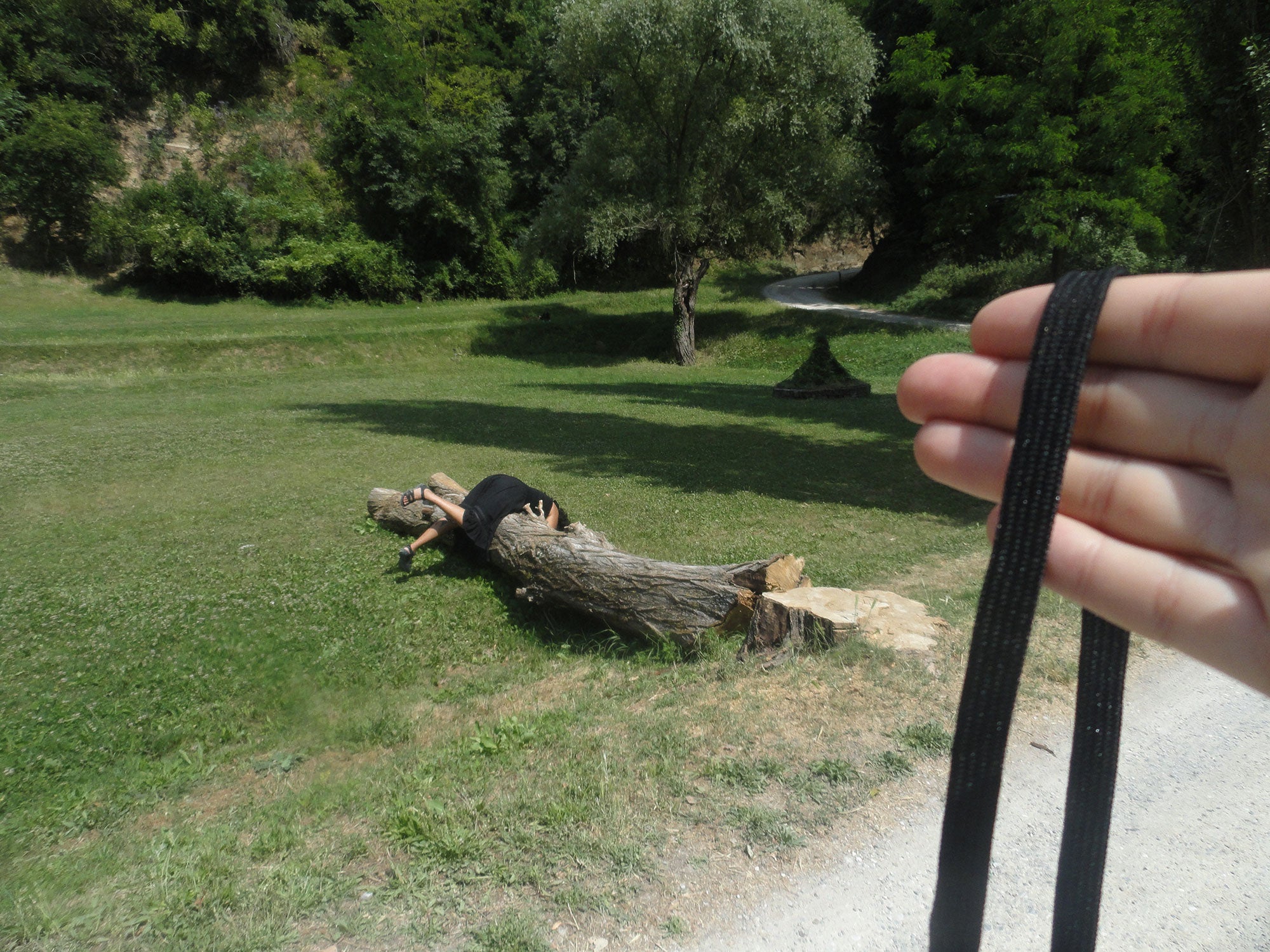
Maja Gray, falsely knotting 1, 2026. Performance documentation. Courtesy of the artist.
Opening Reception:
Fri., Sep. 4, 5–8 p.m.
Ecco, eco features works by students who participated in the Department of Art and Art History summer program, Learning Tuscany. In this 6-week interdisciplinary course, students engaged with historic Italian sites through counter-mapping, embodied action, and deep listening practices. Ecco, eco brings together our resulting artist books, performance documentation, alternative sightseeing guides and tours, and a collaborative sound archive. We offer this as an alternative travel guidebook and a living document of our time together.
Artists
- Amanda Amato
- Genevieve Bentz
- Emme Day
- Austine Donayre
- Ava Doyle
- Juliana Flores
- Alexandra Fox
- Kira Gougeon
- Amalya Graham
- Maja Gray
- Mary Hoang
- Hannah Johnson
- Aphrodite Kehribar
- Carly Klein
- Paris Lack
- Juliette Madere
- Libby McCutchan
- Nicolas Miller
- Penelope Price
- Kendall Warwas
- Merideth Weddle
- Maryn Wright
Ecco, eco is curated by Assistant Professor of Practice Hannah Spector and Kate Gonda (MFA 2027).
About Learning Tuscany
This Learning Tuscany program focuses on the art and architecture of Tuscany and central Italy. Students live and work in the beautiful Tuscan town of Siena, one of Europe’s most important cities in the Middle Ages and Renaissance. Contemporary Siena is home to a major university and is rich in cultural traditions, including Siena’s famous Palio horse race. From Siena, students can travel by train or bus to Florence, Rome, and other scenic sites in Tuscany.
Students enroll in an art history course and a studio art course taught by faculty from the Department of Art and Art History at The University of Texas at Austin. These courses focus on art and experience. How do we, as contemporary viewers, experience art from the past? How can daily observations, whether through drawing, print, painting, photography, or sculpture, help inform and enrich this experience? Group discussions and visits to other cities, such as Florence and Rome, help frame students’ experiences within a broader view of Italy. The program's integrated approach balances carefully designed trips with individual and small-group projects to explore the forces that shaped Italian cities and landscapes.
Students explore myriad ways of seeing the significance of Tuscany through careful collaboration between two University of Texas at Austin faculty members who focus on the art and art history of Tuscany.